Design / THE MARLIN JOURNAL
A small mark, a clear composition
Style small logos, tonal repeats and larger lettering by choosing a focal point, a restrained palette and space around each design.
Look at the mark as part of the outfit
A logo has a position, a scale and a colour before it has a name. When styling it, consider those visible qualities first. A small flag near a hem behaves differently from large lettering across a chest. Put the garment on and notice where your eye goes. That point can become the outfit's focus, or a quiet detail within a broader composition.
The Crest cap has a small cream two-stripe burgee at the centre front of its navy shape. With a plain top, that mark can provide the only visible motif. A simple colour connection elsewhere, such as a light tee or cream shoe, is enough to make the arrangement feel considered.
Decide how many points should speak
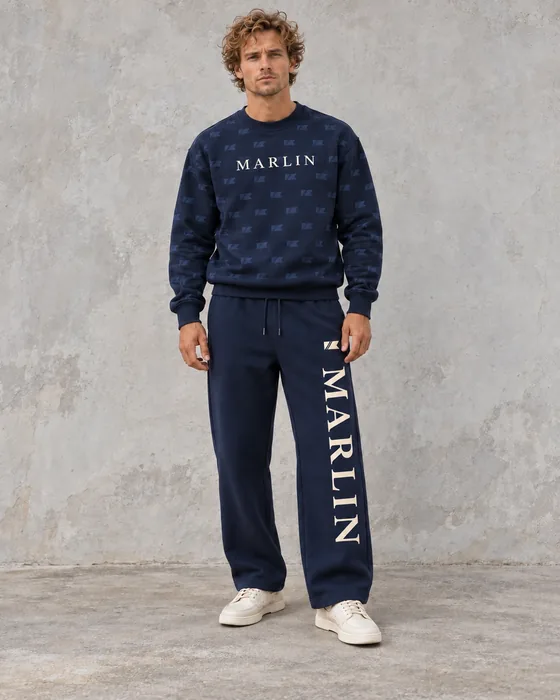
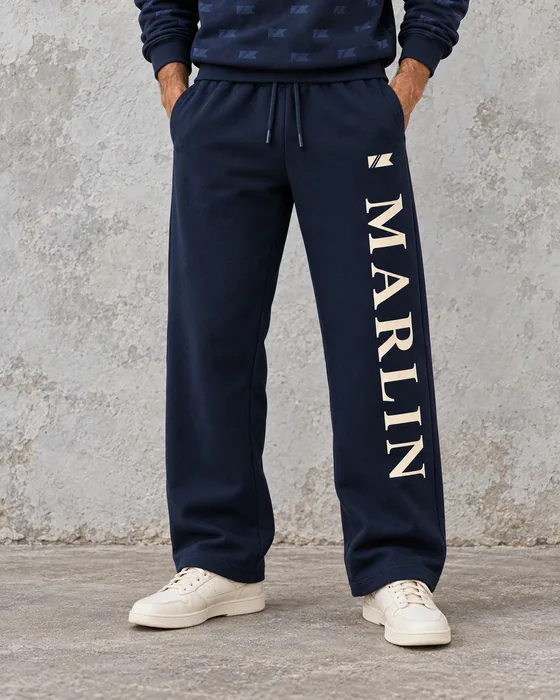
Begin with one main design detail and build the rest of the outfit around it. This does not mean that other logos must be absent. It means checking whether each additional mark adds something you want. A cap, chest print and prominent trouser graphic can create several separate points of attention. Try the combination, then remove one item and compare the effect.
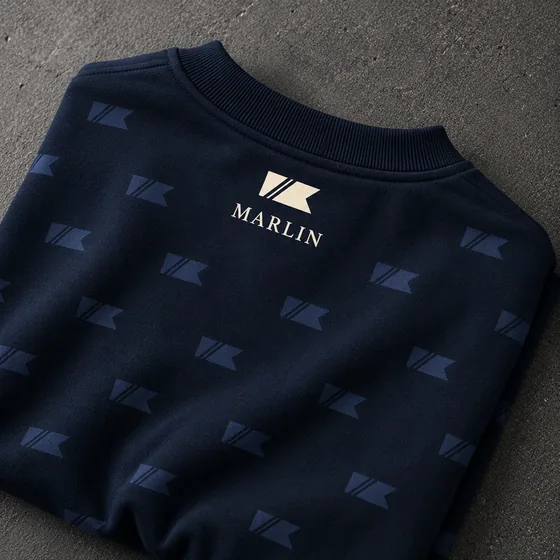
The Burgee Crew combines cream MARLIN chest lettering with a tonal burgee pattern and a small flag beneath the back collar. With a plain bottom, the front lettering can remain the strongest feature. The tonal pattern provides another level of detail without requiring a second bold graphic beside it.
Let colour do some of the connecting
Repeat a colour rather than a logo when you want the pieces to feel related. A small cream flag can connect with an ivory base layer; a navy motif can connect with navy trousers or a dark bag. Keep the connection broad enough to use the clothes you own. Exact shade matching is not necessary for every part of an outfit.
Try a two-colour arrangement first, then introduce a third shade through one piece. Photograph both versions. A restricted palette can make a larger print feel calmer, while a colourful outfit may turn the same print into just one element among several. Use the effect you prefer rather than treating subtle branding as a fixed uniform.
Distinguish a small mark from a tonal repeat
Minimal visual impact can come from a small mark, but it can also come from a pattern kept close in tone to its background. These are different design choices. A repeated motif covers more of the garment even when its contrast is low. Look at the item from across the room as well as close up to judge how present the pattern feels.
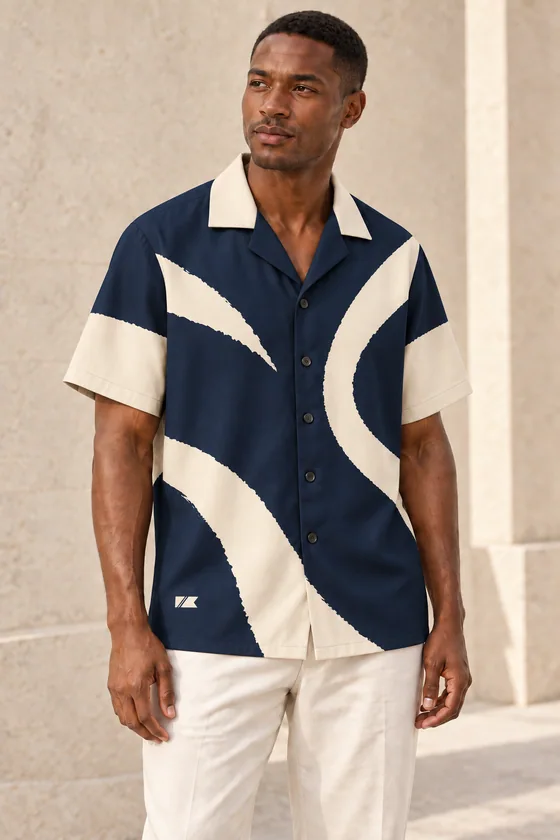
When browsing the coastal essentials collection, compare the placement of flags, lettering, stripes and repeats. Choose based on the visual role you want the piece to perform. A small hem flag can accompany a strong jacket; a broad patterned area may be the detail you want to keep most visible.
Frame the design with a layer
An open jacket or cardigan can frame a chest detail while leaving the rest of the upper body quieter. A closed layer changes what can be seen, so check whether the remaining fragment looks intentional to you. You might prefer a full band, a small flag above the opening or no visible print at all. Each is a useful styling choice.
The Blue Horizon hoodie has two ocean-blue bands around the chest, back and upper sleeves, with a small navy flag above them. Try an open outer layer to see how much of the bands remains visible. The wider colour arrangement may lead the outfit even though the flag itself is small.
Leave enough space to notice the detail
Complete the outfit, then check the surrounding elements: jewellery, bag straps, scarf ends and the edges of other layers. They can frame a logo, cover it or introduce new lines beside it. There is no need to display every detail at once. If a strap naturally crosses the design and you like the result, let the garment work as part of everyday clothing.
Keep a photograph of two combinations: one in which the mark is the focal point and one in which it recedes. This gives the same piece more than one role. Thoughtful logo styling comes from scale, placement and your own choices about what remains visible, allowing a small design decision to sit comfortably within a complete outfit.
Written by MARLIN Editorial. Product details and size guides are linked throughout this story.
Back to the journal