Style / THE MARLIN JOURNAL
The quiet architecture of a cardigan
Use a cardigan's neckline, buttons and hem to build considered outfits with a plain tee, navy trousers or tonal brown separates.
Let the opening draw the line
A cardigan gives you a choice before you add any other accessory: open, partly buttoned or closed. Each arrangement changes the visible shape of the top beneath it. Begin with a plain tee and your usual trousers, then compare those three options. Look at the neckline and hem together. An open front creates two vertical edges; a closed front gives the knit more of the outfit's attention.
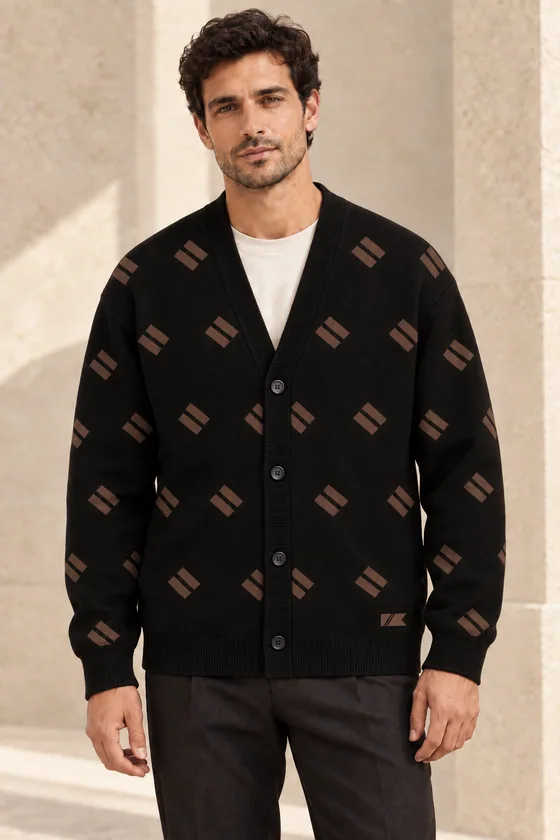
The Espresso Shadow cardigan has a deep V neckline, a button front and dark ribbed edges. Its espresso-brown tonal jacquard is already a pattern. Treat those features as the starting point, allowing the button arrangement to change the look before introducing another competing detail.
Choose a neckline that feels clear
A simple round-neck tee creates a visible light area within a V-front cardigan. Compare where its neckline sits rather than assuming all tees will behave the same way. A low neckline, a high crew neck and an open shirt will each leave a different shape. Use a mirror from the front and side to see whether the layers lie comfortably around the neck.
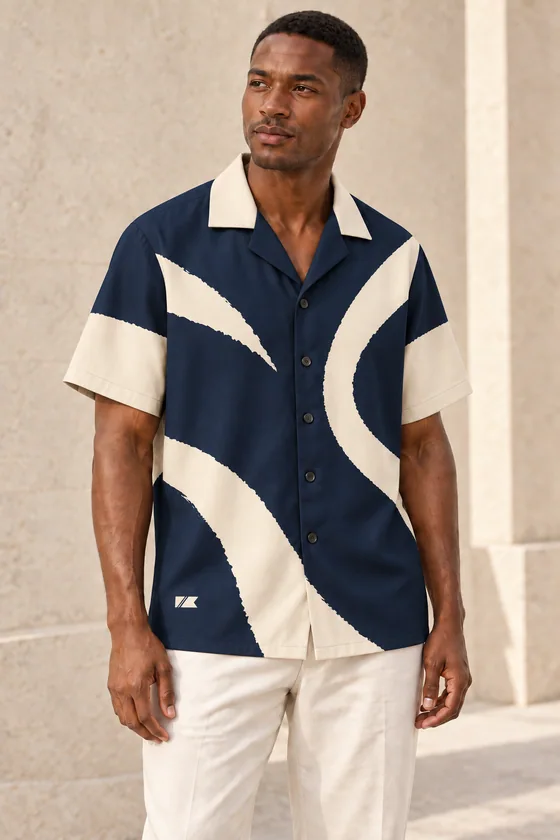
The ivory-base Ivory Ink brings navy brushwork lower on the body and at the left sleeve. With the cardigan open, check how much of that design you want visible. With the cardigan closed, the exposed neckline may be enough of a light accent on its own.
Use the hem as a decision point
With wide trousers, notice where the cardigan ends in relation to the waistband. A visible waistband makes the change of proportion clear; a cardigan covering it creates a looser continuous outline. Both are useful possibilities. Check the shape seated as well as standing, particularly if the cardigan is partly buttoned.
Try opening the lowest button if that arrangement feels better when you sit, or wear the front entirely open. There is no need to follow a fixed buttoning rule. If the front pulls, check your base layer and the cardigan's measurements before attributing the effect to the styling. The button line should not have to hold a fit you find uncomfortable.
Make the outer layer a working partner
Put your coat or jacket over the cardigan before deciding the outfit is complete. Check the arm room, neckline and front opening, then move as you normally would. A knit and a woven outer layer can look compatible on a hanger while feeling awkward together through the sleeves. The useful pairing is the one you can sit and reach in comfortably.
When browsing the knitwear collection, consider which existing coats would accompany the pieces. Use the listed measurements and the layers you intend to wear. A wardrobe gains more from a cardigan that fits into several familiar arrangements than one that requires an entirely new outfit around it.
Find three versions of the same idea
Keep one base combination and change its arrangement across three settings. For a routine day, wear the cardigan open over a tee. For a meal or a quieter evening, try it buttoned over the same base and use a shoe with a different outline. For time in transit, check that the cardigan and outer layer are comfortable together while seated.
Photograph the options so you can remember which button positions, necklines and shoes worked. Return to those observations instead of adding an accessory to solve every uncertainty. A cardigan is useful precisely because a small change in how it is worn can make the same set of clothes feel considered again.
Written by MARLIN Editorial. Product details and size guides are linked throughout this story.
Back to the journal