Style / THE MARLIN JOURNAL
A hood, a collar, a little room
Layer an oversized hoodie by checking sleeve room, arranging the hood and comparing jacket lengths, with simple colour combinations to try.
Start from the inside
A layered hoodie outfit works best when each piece has room to occupy its own shape. Put on the T-shirt or base layer you intend to wear, followed by the hoodie. Check the neck, cuffs and hem before adding a jacket. A small glimpse of the layer beneath can look considered; a bunched sleeve or twisted neckline will be distracting throughout the day.
Compare the designs in the hoodie collection with this sequence in mind. An oversized cut is already part of the garment's shape. Use its measurements rather than assuming you need to size up again for layering. Decide whether you want the base tee hidden or visible, then check it standing and seated.
Ask the jacket for enough space
Try the jacket over the complete combination and close it. Reach forward as if holding a steering wheel, bend your elbows and sit down. Notice pressure across the upper back, under the arms or at the front opening. If a jacket is comfortable over a thin tee but restrictive over the hoodie, that pairing may not suit the day you have planned.
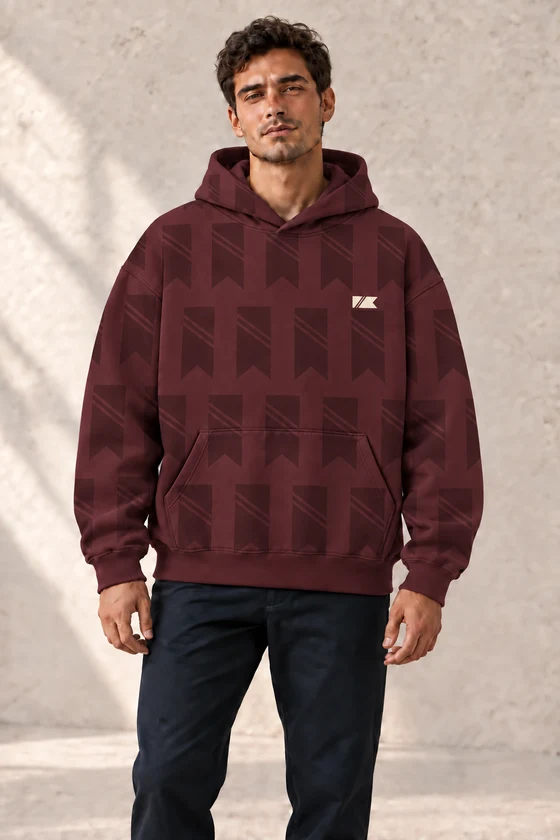
The Afterhours hoodie has dropped shoulders, a roomy hood and a kangaroo pocket. These details affect how another layer sits over it. Leave space for the sleeves and pocket area without assuming that a larger outerwear size is always the answer. Its overall length and shoulder shape matter too.
Arrange the hood once
When wearing a hood outside a jacket collar, smooth it into place before leaving the mirror. Check that the fabric lies comfortably at the back of the neck and does not pull the jacket backwards. If the hood sits inside a high collar, assess whether the folded fabric feels bulky. Neither arrangement is obligatory; the useful choice is the one that lets you turn your head easily.
MARLIN's Afterhours and Blue Horizon designs have no hood drawcord. Build the look around the hood as it is, rather than expecting to cinch it into a different shape. An open jacket can leave the neckline more visible and make the layers easier to distinguish.
Compare short and long outlines
A shorter jacket frames the hoodie and can reveal a little of its hem. A longer coat creates a continuous outer line, especially when worn open. Try both with the same trousers and shoes before deciding. If several hems meet close together, adjust the base tee first; it may be the easiest way to simplify the arrangement.
The Night Harbour bomber has a deep brown body, a broad ivory band and ribbed edges. As a styling comparison, place it beside a hoodie to see how those colours and its hem relate. Check actual garment measurements and movement before choosing the pairing. Colour compatibility alone does not establish comfortable sleeve room.
Give the design a quieter neighbour
A hoodie with a visible pattern or band can be the outfit's main detail. Use plainer trousers and a restrained outer layer if you want that design to remain clear. Afterhours carries a tonal flag repeat in burgundy; navy, brown and light neutral pieces are possible partners to test. Add one colour at a time and review the outfit in daylight.
The white Blue Horizon uses two ocean-blue bands around the chest, back and upper sleeves. A plain navy bottom can echo the darker details, while an open coat allows the bands to stay visible. If the jacket also has a strong motif, compare the combination before adding more accessories.
Make the last layer serve the day
Layering is also a practical arrangement: you may need to remove the jacket indoors, carry it on a train or sit in the complete outfit for a long time. Test those ordinary actions. Check whether a bag strap displaces the hood and whether you can reach the pockets you expect to use. Comfort is easier to judge through movement than through a carefully held pose.
Choose outerwear appropriate to the conditions in your plans; a hoodie's shape or colour does not establish protection from wind or rain. Once the combination works, record the pieces and sizes you used. A good layered outfit becomes easier to repeat when the sleeve room, hem lengths and neckline have already been considered.
Written by MARLIN Editorial. Product details and size guides are linked throughout this story.
Back to the journal